Bruce Springsteen was honored Sunday night at the Kennedy Center Honors along other major contributors to American culture (Robert DeNiro, Mel Brooks, Dave Brubeck and Grace Bumbery) Read a summary of the ceremony at Rolling Stone’s website.
Bruce Springsteen was honored Sunday night at the Kennedy Center Honors along other major contributors to American culture (Robert DeNiro, Mel Brooks, Dave Brubeck and Grace Bumbery) Read a summary of the ceremony at Rolling Stone’s website.
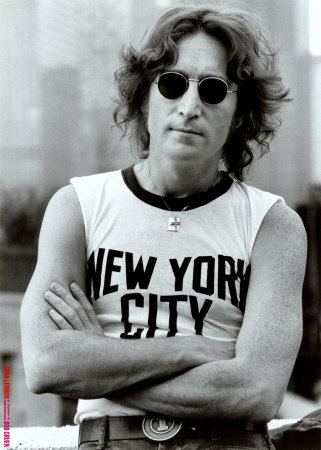
 It doesn't seem right that the man who gave us "All You Need is Love" and "Give Peace a Chance" met with such a violent end on December 8, 1980. John Lennon was a man whose music came to embody a generation as a member of the Beatles. After the break up of the Beatles, he made several solo albums and adopted a new hometown, New York City. After the birth of his son Sean in 1975, he retired from public life to be a stay at home dad. In 1980, he re-emerged with a new album called Double Fantasy about his life with wife Yoko Ono and son, Sean.
 On December 8, 1980, the fantasy of John Lennon’s life came to an abrupt end at the hands of Mark David Chapman. Earlier in the day, Chapman waited outside of Lennon’s apartment building, the Dakota, to get an autograph. That evening, he returned and shot Lennon in cold blood with a .38 caliber revolver. After shooting Lennon, he waited for police to arrive as John Lennon lay dying nearby. He was sentenced to twenty years to life. In 2000, he was denied parole. At his hearing, the New York State prison officials explained their decision saying, his “vicious and violent act was apparently fueled by your need to be acknowledged.” He continues to live behind bars at Attica Prison in New York State.

After his death, John Lennon was honored around the world, and people gathered outside the Dakota to listen to his music in a candlelight vigil. Here is a clip of a crowd singing some of his songs during a candlelight vigil.
Here is John Lennon performing “Imagine” at Madison Square Garden in 1972.
Read an interesting article about John Lennon in the December 1980 issue of New York magazine.
Here is a very candid 1970 interview with Rolling Stone founder and editor Jann Wenner. The interview took place soon after the Beatle’s break-up, and John Lennon sounds bitter in his comments about his fellow Beatles. He would reconcile with Paul McCartney before his death.
[Images via eightiesonline and unfogged]

On the morning of December 7, 1941, Japanese aircraft launched a surprise attack on the American base at Pearl Harbor in Hawaii. The first wave of Japanese aircraft hit Pearl Harbor at 7:51 a.m. The shocking attack nearly devastated the American navy, as nine ships were destroyed and 21 were severely damaged. The most awful losses that day were not measured in steel tonnage, however, as the attack also resulted in an incredible loss of human life. Specifically, the attack resulted in 2,350 casualties.
I was not alive during the attack on Pearl Harbor, but I think all of us who witnessed the September 11th attacks can relate to the feeling of panic that rises when Americans are attacked on our own soil. Today, I am thinking of those who served our country during World War II, including my grandfather, and all those who have continued to serve our country. I honor you today and everyday.
Here is some footage of the attack on Pearl Harbor.
The site of the attack, which includes the final resting place of the U.S.S. Arizona, is now part of the National Park Service. Check out the park's website for more history of the attack and information about the preservation of Pearl Harbor.
[Image via rememberingpearlharbor]

An interesting article on the diplomatic roots of Japan’s attack on Pearl Harbor in today's NY Times. Specifically, it examines President Teddy Roosevelt’s conduct during the Russo-Japanese War and how it influenced Japan's attack on Pearl Harbor on December 7, 1941. The article is written by the son of one of the men who famously raised the American flag at Iwo Jima. What do you think?
[Image via pictureshistory]
 For most of the nineteenth and early twentieth centuries, many people believed that one of the greatest threats to society was the consumption of alcohol. Men and women of different origins and creeds stood united by the belief that society's ills were caused by alcohol consumption. They thought that if the United States could prohibit the sale of alcohol, then crime, drunkenness, domestic violence and corruption would all magically disappear from society. Many religious groups used the fervor normally reserved for their faith to tell the world about the evils of alcohol. Check out this 1920s era prohibition meeting which warns that alcohol has the power to, among other things, entice young girls into honky tonks.
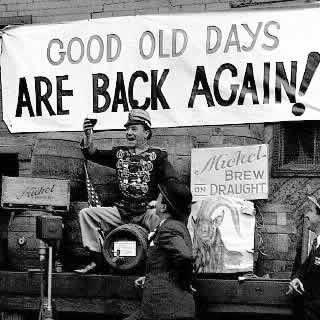
Due to the devoted efforts of the Women’s Christian Temperance Union and other groups, prohibition became a reality in 1919 with the passage of the 18th amendment to the Constitution. However, the twelve years of prohibition merely drove the production and consumption of alcohol underground, allowing organized crime to flourish. Crime was on the rise and the government had to struggle to reign it in. All the advocates of prohibition never saw that coming. The women’s groups that had once worked to end the sale of alcohol eventually reconsidered and formed groups that called for the amendment’s repeal. Their efforts carried greater weight as they had gained the right to vote in the years since the passage of prohibition. When Franklin Delano Roosevelt ran for president on the Democratic ticket in 1932, he ran on a platform that called for the repeal of prohibition. Beginning in 1933, the states began to ratify the 21st amendment which repealed the 18th amendment. The amendment was fully ratified on December 5, 1933. Check out this newsreel from 1933 which boasts that the repeal of prohibition will create new jobs, a particularly enticing idea during the Great Depression (and now).

This is not a date that I think of often, but there is a group out there looking to make December 5th, or Repeal Day, a national holiday. You can check out their site and take a look at their reasoning here.
Happy Repeal Day!
[Images via blogadilla, blogcdn and winedude]


 Posts
All Comments
Posts
All Comments