Monday, January 4, 2010

FDR and the Case of the Mole

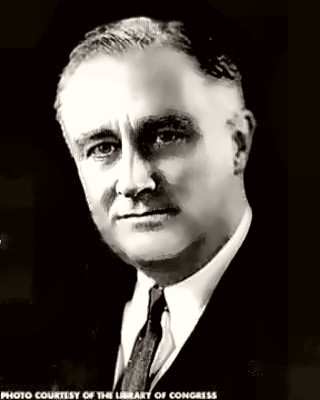
Here is an interesting NY TImes article on a new book that explores a possible cover-up of the real cause of FDR’s death. As the reviewer states, no one questions that FDR died of a stroke, but there has been some dispute among doctors and historians as to what caused the stroke. As evidence, the authors of the reviewed book site a mole above FDR’s left eye that appears in photos of his early terms but disappears from photos of his fourth and final term. Could this mole be a melanoma? The reviewer, a medical doctor, does not appear to be convinced that the book offers enough facts to support it’s claim. Take a look and be the judge, is this history or pure histrionics?

[Image via PoorWilliam]


Thursday, December 31, 2009

We’ll Take a Cup of Kindness Yet, for Auld Lang Syne

In just a few hours, we’ll all be getting ready to make and probably break New Year's resolutions (will this be the year I give up Diet Coke?), drink some champagne and watch the ball drop. Ever since New Year's Eve in New York City’s Time Square has been televised, people in the streets and those of us at home traditionally hear “Auld Lang Syne” play at midnight. As we attempt to sing along (does anyone really know all the lyrics to this song?), it might be interesting to think about how the song became a part of New Year’s Eve celebrations everywhere, and especially those in New York.

The song was first published by the Scottish poet Robert Burns in 1796 in a book entitled Scots Musical Museum. Scott reportedly copied the song down after he heard it sung by an older Scottish man. The term “Auld Lang Syne” translates to “old long since” or “times gone by”. I always think of this song as one of the most popular standards that no one really knows the lyrics to. Check out different versions of the lyrics to Auld Lang Syne here. The song became a central part of New Year’s celebrations in New York City due to the efforts of a Canadian bandleader named Guy Lombardo.

Guy Lombardo grew up in Canada where he heard “Auld Lang Syne” sung by Scottish immigrants. When he formed his dance band, His Royal Canadians, the song became one of their standards. Guy Lombardo and His Royal Canadians played the song at midnight at a New Year’s eve party at the Roosevelt Hotel in New York City in 1929. “Auld Lang Syne” has been a part of New Year's eve in New York City ever since.

Here is a 1945 recording of Guy Lombardo and His Royal Canadians performing “Auld Lang Syne.” Happy New Year to all my readers!

[Image via 1231]


Saturday, December 26, 2009

Empire State of Mind - The New Netherland Project


Check out this great article in the NY Times on an ongoing project to preserve the history of the New Netherland colony (which included modern day New York). It’s interesting to hear about the care and preservation of such crucial documents. In 1911, a fire where the papers were housed nearly ruined the collection. Had the fire ruined all of the collection, we would have lost a crucial window into life in early American history.

To find out more about the New Netherland Project, visit their website.


[Image via binghampton]


Monday, December 21, 2009

Suspicious Minds: The King in the People’s House

Today marks the anniversary of one of the strangest meetings ever held in the White House. On December 21, 1970, Elvis Presley met with President Richard Nixon. The meeting was the result of a letter written by Elvis Presley to President Nixon in which he suggested he be made a “Federal Agent-at-Large” in order to help fight the drug culture and “Hippy Element” in American society. The irony of Elvis offering to help fight a war on drugs is easily seen in light of the nature of his demise (I say this as a fan).

In his meeting with Nixon, Elvis presented the president with a Colt 45 pistol and pictures of his family. According to accounts of the meeting produced by staffers shortly after the visit, Elvis told Nixon that he wanted to infiltrate youth culture and combat some of the anti-American sentiment that he felt was on the rise. He stated that he believed that the Beatles were responsible for much of the anti-American sentiment. At the end of the meeting, he hugged Nixon and told him he supported him. Oddly enough, of all the photocopy and reproduction requests received by the National Archives each year, the photo of President Nixon and Elvis’ meeting receives the most requests. That is, more people request a copy of this photo than reproductions of either the Bill of Rights or the Constitution.

Visit the National Archives site to check out Elvis’ letter to the president, as well as photos of their meeting and other related documents.


[Image via tvland]


Thursday, December 17, 2009

If Only I was Named after a President...

Cool NY Times photography project on people (men) who share names of former presidents. The namesakes are posed in famous presidential poses to very cool results. Check it out.

This Land is Your Land...Unless You're Japanese in America in 1942

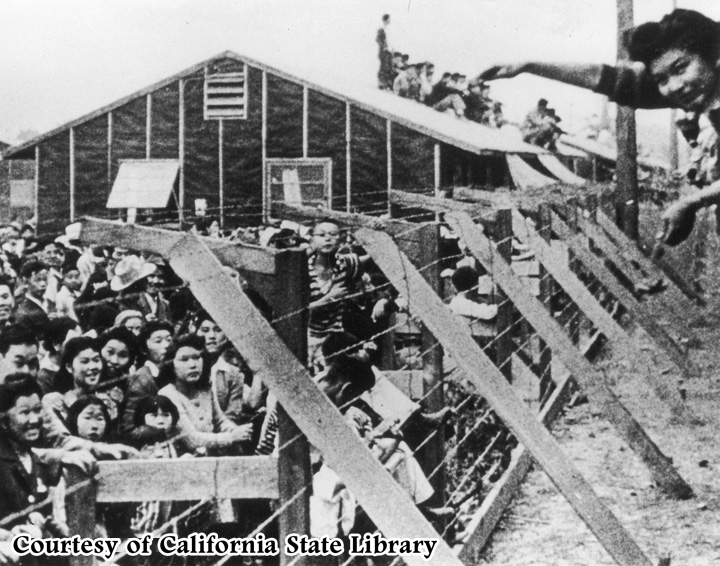
On December 17, 1944 the U.S. Army announced it would be ending its policy of holding Japanese Americans in internment camps, allowing “evacuees” to return home.

President Roosevelt signed Executive Order 9066 on February 19, 1942 which began the process of rounding up 120,000 Americans of Japanese heritage to be funneled into camps (Executive Order 9066). These Americans were sent to “relocation centers” in California, Idaho, Utah, Arizona, Wyoming, Colorado and Arkansas.

The call to push Japanese Americans into internment camps was fueled by farmers who competed against the Japanese for labor, politicians who catered to anti-Japanese constituencies, and the panic that resulted from the attack on Pearl Harbor. At a time when Norman Rockwell was painting his “Four Freedoms” the American government was denying basic freedoms to thousands of its own citizens.

In 1988, Congress passed legislation which repaid the remaining 60,000 camp survivors reparations of $20,000.00 each. I doubt that made any great difference to the survivors, who lost something in those years that can never really be quantified, namely, their dignity.

For more information on Japanese internment, including the condition of the U.S. camps and legal challenges to internment, click here.

For information on a PBS documentary on the subject, and more information on the camps, click here.

[Image via lasanddisorder.org]


Wednesday, December 16, 2009

Boston Tea Party….No, Not the Fox News Kind

December 16, 1773 marks the anniversary of the Boston Tea Party.

In the years following the Seven Years War (or French and Indian War), some colonists became suspicious of the British, thinking they were attempting to subvert their liberties. These suspicions were further aroused by the passage of acts which imposed new taxes on the colonies; the Sugar Act, the Quartering Act, the Stamp Act and the Townsend Act. The Townsend Act placed a tax on British tea, paper and glass. Patriots like Samuel Adams, John Otis and John Dickinson protested this tax claiming “no taxation without representation.” The Townsend Act was repealed in 1770, but a tax on tea was retained to show that parliament believed it had the right to tax the colonies, even though no members of the colonies were represented in parliament.

With that background in mind, some colonists continued to protest British practices, and attempted to show their fellow colonists that the British were chipping away at their liberties, and violating English law in the process. Sometimes these methods of protest took strange turns. In one incident, a British custom vessel called the Gaspee ran aground off the coast of Rhode Island. Since the vessel had stopped several colonial smuggling ships, a group of colonists were quick to destroy it. A group dressed as Native Americans quickly boarded the ship. They ordered the crew off and then set the ship on fire. The British attempted to arrest those responsible in order to put them on trial in England.

The most famous of these incidents, however, was the Boston Tea Party. Colonists in Massachusetts and elsewhere who opposed the taxes boycotted British tea. Instead of British tea, they drank smuggled Dutch tea, or none at all. Parliament passed the Tea Act in 1773 to lower the price of East India Trading Company tea to make it lower than Dutch tea, even with the tax. The colonists still weren’t buying. Before a ship of British tea could be brought to shore, Boston colonists dressed as Native Americans boarded the ship and dumped 324 chests of tea into the harbor. Some praised the “tea party” as a defense of liberty, others were critical of the destruction of private property.

Here is Sesame Street’s interpretation of the “T” Party. Enjoy!

[Images via steadyhabits]